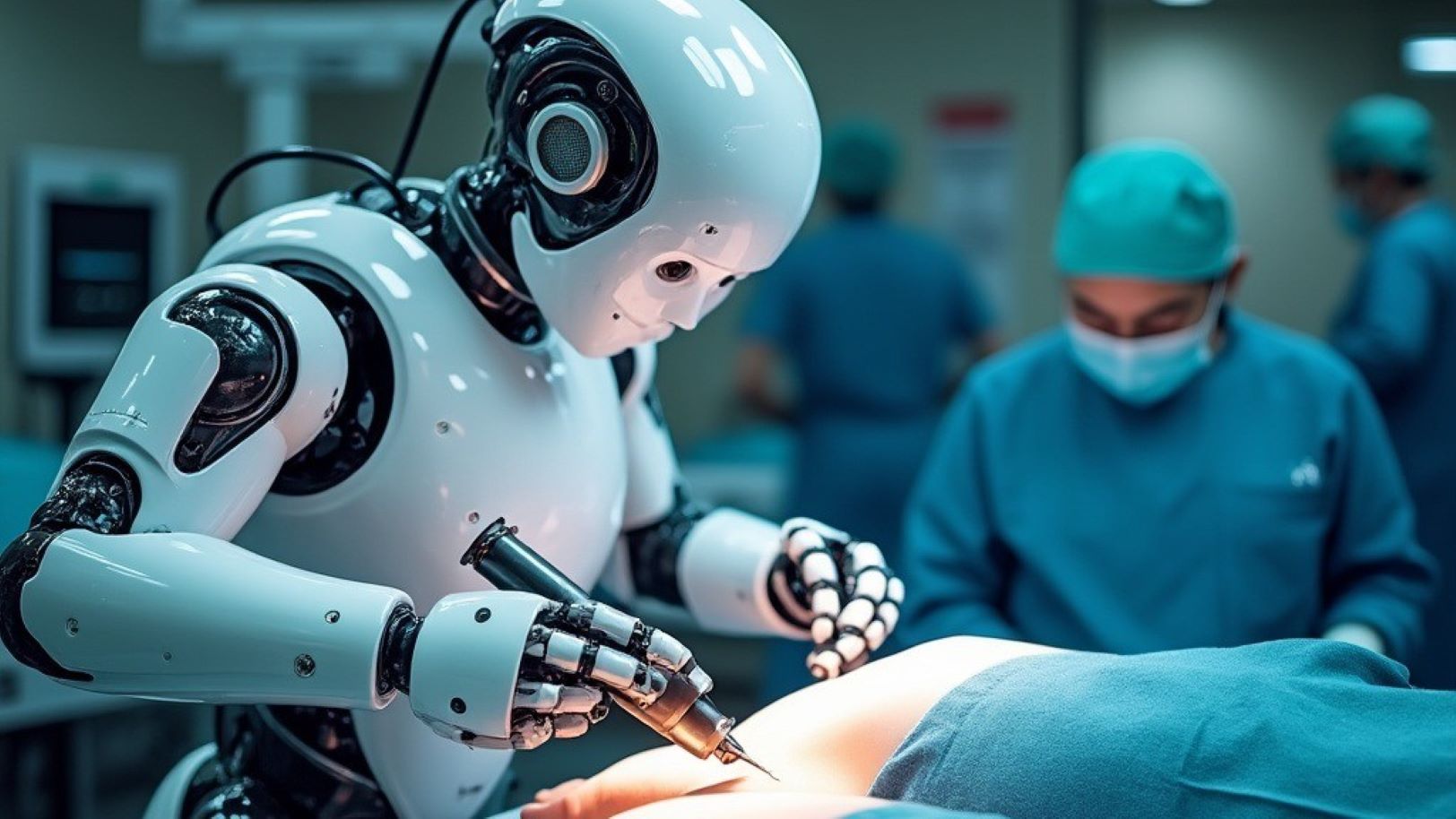

The world of Artificial Intelligence is no longer confined to chatboxes and digital canvases. That shift has been gradual, and then suddenly obvious. We are now witnessing the rise of Physical AI, the integration of advanced machine learning with the tangible world around us. Unlike traditional AI, which processes text and images to generate digital output, Physical AI enables machines to perceive, reason, and act within a three-dimensional environment. It is less about answers on a screen and more about decisions that move, lift, avoid, or stop.
By 2026, this technology has moved well beyond research labs and demos. It is showing up on factory floors, in warehouses, and even out on city streets. This guide lays out a practical roadmap for understanding and implementing Physical AI systems, especially for teams trying to solve real operational problems where software alone just is not enough.
Core Entities in Physical AI
To navigate this space without getting lost, it helps to be clear about the core building blocks involved. These ideas come up again and again, and while they sound abstract at first, they become very concrete once you see them in action.
Physical AI refers to a branch of AI where models, often Multimodal Large Language Models, are embedded into physical bodies such as robots or autonomous vehicles so they can interact directly with the real world.
A Digital Twin is a high-fidelity virtual replica of a physical object, machine, or environment. It is used for safe simulation, testing, and training long before anything touches the real world.
Actuators are effectively the muscles of the system. Motors, pistons, and grippers convert digital commands into physical motion, and they do a lot of the heavy lifting, literally.
Sensors act as the senses. Cameras, LiDAR, ultrasonic sensors, and similar hardware allow the AI to perceive depth, motion, proximity, and context.
The Sim-to-Real Gap describes the mismatch between how an AI behaves in simulation and how it performs once exposed to the unpredictability of reality. This gap is smaller than it used to be, but it never disappears entirely.
Step 1: Define the Physical Problem and Scope
Before touching hardware or choosing models, the first step is almost boring, but it matters more than most teams expect. You need to identify a specific problem that digital-only solutions simply cannot solve.
Start by analyzing inefficiencies. Look for unstructured tasks where traditional automation breaks down because the environment keeps changing. Warehouses are a classic example. Boxes are not always in the same place, lighting shifts, and human workers move unpredictably. Rule-based automation struggles here.
It also helps to apply an impact versus effort mindset. A high-impact, low-effort pilot project is usually the right place to begin. Rather than attempting a full humanoid robot, many teams start with an AI-enhanced autonomous mobile robot for material handling. It is less glamorous, perhaps, but far more achievable.
Finally, set measurable KPIs early. Success should be defined clearly, using metrics such as a 15 percent reduction in downtime or a 99.9 percent collision-avoidance rate. Without these anchors, projects tend to drift.
Step 2: Architecture Design Sensing and Actuation
Physical AI operates in a continuous loop of perceive, think, and act. Designing this loop carefully is critical because every delay or blind spot shows up in physical behavior.
Sensor selection comes first. Multimodal sensing is no longer optional. Cameras provide rich visual context, LiDAR delivers accurate depth perception, and IMUs help maintain balance and orientation. Together, they give the AI a more complete understanding of its surroundings.
Actuators come next. The choice depends heavily on precision requirements. By 2026, smart linear motors have become the preferred option in many industrial settings. Their integrated feedback loops allow the system to sense resistance, weight, or unexpected contact, which makes movements smoother and safer.
Edge computing ties it all together. Physical AI often requires millisecond-level response times, so relying entirely on cloud processing is unrealistic. Edge AI gateways process data locally, right on the machine, keeping latency low and reliability high.
Step 3: Build a High-Fidelity Digital Twin
Training Physical AI directly in the real world is slow, expensive, and in some cases dangerous. This is where the Digital Twin becomes indispensable.
A common standard for building these environments is OpenUSD, which allows teams to create interoperable, detailed three-dimensional scenes that different tools can understand. Once the geometry is in place, physics grounding becomes essential. Gravity, friction, material properties, and joint constraints all need to behave realistically.
Platforms such as NVIDIA Omniverse are widely used to simulate how a robot arm interacts with different surfaces, whether it is gripping a slick metal component or a lightweight cardboard box. These details may sound minor, but they have a big impact on real-world performance.
Domain randomization adds another layer. By intentionally introducing variation in lighting, textures, object placement, and even random obstacles, the simulation prepares the AI for the messiness of reality. In practice, this step often makes the difference between a smooth deployment and months of troubleshooting.
Step 4: Training with Reinforcement Learning
Physical AI does not just learn by observing patterns. It learns by doing, failing, and adjusting.
Reinforcement Learning is commonly used here. The AI receives rewards for successful actions and penalties for mistakes such as collisions or dropped objects. Over time, it discovers behaviors that maximize reward, often in ways that surprise even experienced engineers.
Generative AI plays an increasing role as well. Foundation Models that already understand spatial logic and natural language allow operators to issue high-level commands conversationally, rather than writing thousands of lines of procedural code. It feels a bit strange at first, but it works.
Synthetic data generation ties back to the Digital Twin. Millions of simulated scenarios can be created, including rare edge cases like a person unexpectedly stepping into a robot’s path. Testing these situations in the real world would be unsafe, but in simulation they are invaluable.
Step 5: Bridging the Sim-to-Real Gap and Deployment
The final stage is moving the trained intelligence from the simulator into the physical machine, which is where most anxiety tends to surface.
A common approach is closed-loop validation using shadow mode. The system observes the real environment and computes actions without actually executing them. Engineers can then compare expected behavior with reality and adjust accordingly.
Once deployed, fine-tuning continues at the edge. Real-world environments always introduce surprises. Continual Learning allows these experiences to feed back into the model, refining behavior over time instead of freezing it at launch.
Safety, however, remains non-negotiable. Hard-coded kill switches and safety zones should always exist outside the AI’s control. Even the most advanced system can hallucinate or misinterpret a situation, and when physical motion is involved, fail-safes are essential.
In the end, Physical AI is not about replacing humans or chasing science fiction visions. It is about carefully extending intelligence into the physical world, step by step, with a clear understanding of both its potential and its limits.
Frequently Asked Questions
Q. What makes Physical AI different from traditional robotics?
A. Traditional robots follow rigid, “if-this-then-that” code. If a box is two inches out of place, a traditional robot fails. Physical AI uses reasoning to see the box is out of place, adjust its grip, and complete the task.
Q. Do I need a humanoid robot to use Physical AI?
A. No. Physical AI can be embedded in any physical system: smart HVAC systems, autonomous delivery drones, or even intelligent manufacturing arms. The “body” depends on the task.
Q. Is Physical AI expensive to implement?
A. The initial cost of high-compute edge hardware and digital twin development is high. However, by 2026, AI-as-a-Service (AIaaS) and open-source models have significantly lowered the barrier to entry for mid-sized enterprises.
Q. How does Physical AI handle safety?
A. Safety is managed through a combination of Edge AI processing (for zero-latency stopping) and “physics-informed” guardrails that prevent the machine from exceeding certain force or speed limits, regardless of what the AI model suggests.